
The High-Converting Interior Design Website: 7 Essential Elements to Attract Premium Clients
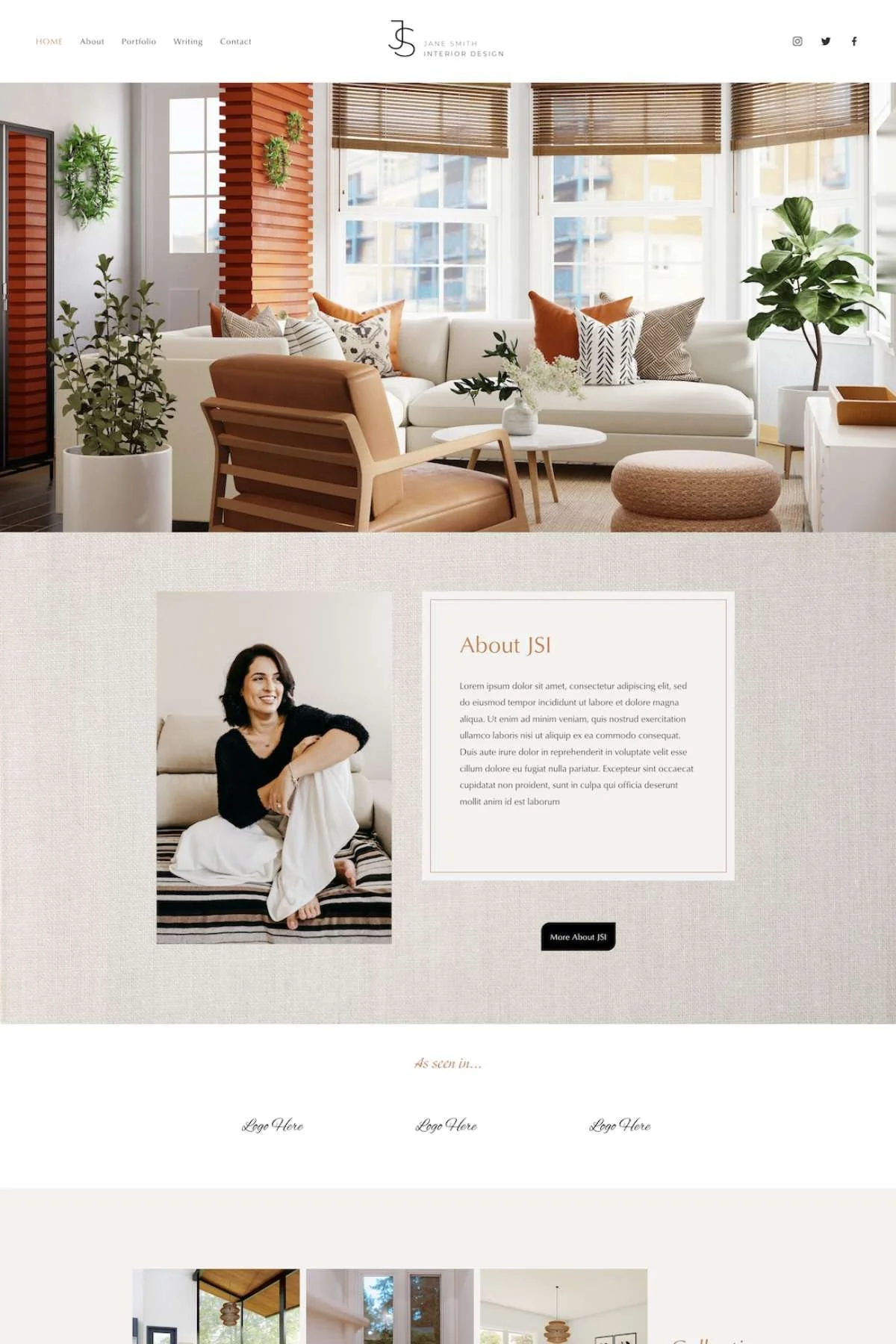
Interior Design Website Design: Strategic insights for interior design studios and high-end interior designers.
Are you an interior designer struggling to turn website visitors into premium clients? An effective interior design website is a digital portfolio as well as a strategic extension of your interior design studio. It showcases your work, builds trust with clients, reflects your process, and creates a clear, confident path for the right clients to reach out. Whether you're an interior designer, stylist, or creative studio, your website should reflect your aesthetic while guiding potential clients through a seamless experience.
And don’t forget the SEO / AIO!
Below you will find 7 essential elements to include on your interior design website to ensure it looks polished and works strategically to attract your ideal clients.
But first…
Before you start designing, you need to build the foundation of your website, and that starts with knowing who you want to attract. In other words, who your website is really talking to.
This is sometimes called your Ideal Client Avatar or Ideal Customer Persona (ICP). For this article, I’ll use ICP.
Your ICP is a detailed profile of the kind of person you want to work with, and yes, you get to make it up. It goes beyond surface-level facts like age, location, or income. Those are important too, but on their own they don’t tell you much.
A 42-year-old woman from Boston doesn’t give you much to go on. But a 42-year-old creative director in Boston who’s juggling a demanding job, values quality over quantity, and craves simplicity in her personal life? Now you’re starting to see the person. That’s when your messaging starts to click because you’re designing for why she makes decisions, not just who she is.
Your ICP should include demographics like age, lifestyle, and location, plus deeper layers: values, habits, aesthetic goals, pain points, and what they actually care about.
Getting specific matters. If your ICP is a high-net-worth empty-nester, your language might focus on white-glove project management and professionalism. If your ICP is a first-time homeowner, your tone might be more educational and reassuring.
When your content speaks directly to their needs, wants, and motivations, they’ll feel like you “get” them, and that’s when connection and conversion naturally happen.
Once you have your ICP clearly defined, then you can start building the website around it.
1. Homepage Conversion Architecture: Mapping the Client Journey
Your interior design website homepage should instantly reflect your aesthetic, your service tier, and the caliber of clients you serve. With a strong headline, thoughtfully chosen visuals, and clear navigation, it acts as both a welcome and a directive, guiding visitors deeper into your world.
Funnel Strategy: Your interior design website homepage should also guide your clients to take the action you want them to take. For an interior design website, that would ideally be to view your services page or portfolio page, then drive them to inquire or contact. The CTAs (Calls to Action) on the home page should drive users to the services page or portfolio page, and the CTAs on the services page should drive users to the Contact page.
Social Proof ‘Above the Fold’: Include a headline, sub-headline, and hero image at the top on your homepage. Follow this immediately with social proof. This could be a scrolling carousel of publications that your work has been featured in, or a powerful testimonial or press mention. Social proof builds trust, establishes credibility and immediately encourages deeper exploration of your site… which of course is the first part of getting that next client!
2. A High-Converting Portfolio:
Showcase Your Work & Build Trust
The portfolio you display is arguably the most important part of your website, but it must function as a proof-of-concept, not just a gallery of beautiful images. Your portfolio should capture the depth of your work and the breadth of your style. It’s an opportunity to curate projects that reflect your expertise and resonate with the kind of clients you want to attract. This doesn’t need to be a comprehensive archive. Instead, showcase the work that reflects where you’re headed and who you most enjoy working with.
Project Categories: You can segment your project galleries clearly by project type (e.g., residential, commercial, speciality) to help clients find relevant work instantly. Before-and-After shots are very helpful to showcase the transformation your service provides.
Case Studies: Transform your best projects into an in-depth report on a completed project that communicates the entire design process, from initial project scope, client goals and challenges to the final solution and outcome. It functions as a story that showcases your problem-solving skills, creativity, and ability as an interior designer to deliver results. Case studies can include images, sketches, and diagrams, alongside a written description and can also include a review from the client. Including specific challenges encountered, the solutions you implemented, and the final result also help to provide a rich case study that will give potential clients a real insight into what its like to work with you.
Build Trust: Integrate testimonials or client feedback directly alongside the relevant project imagery or inside your case studies. This immediately links social proof to the quality of your visual work, which builds trust between your potential clients and you/ your brand.
Keep it Intentional: Your portfolio should lead with your most distinctive or defining projects. It doesn’t need to show every project. A smaller, intentional selection, thoughtfully presented, can build trust and attract the right clients more effectively than a large volume of work.
3. About Page: Transparency With Your Interior Design Process
Clients are often intimidated by the process of hiring a designer. Trust is built when you demystify that journey by clearly outlining what it is like to work with you
The About or Process page on your interior design website gives potential clients a glimpse into the person and perspective behind the work. It should communicate your values, design approach, and experience in a way that reflects how you work and who you work best with.This again builds trust by telling your potential clients exactly what to expect.
Interior design is inherently personal. You’re creating beautiful spaces; but you’re also helping people shape the places where they live, work, and gather. That’s why clients visiting your website are looking at your about page. They’re looking for someone they can trust with their vision and their home. Your About page is your chance to show what you do, and how you make people feel along the way.
Let your tone reflect your design sensibility. If your work is calm and understated, keep the language grounded and serene. If it’s bold and expressive, let that energy come through. A strong About page feels personal but purposeful. It’s the first step in building connection and confidence before the conversation begins.
4. Services Page: Clarifying What You Do Invites Inquiries
On an interior design website, the Services page should give visitors a clear understanding of what you offer, how you work, and whether your approach aligns with their needs. It’s a practical, decision-support page, one that removes guesswork and helps clients picture what partnering with you is like.
Focus this page around these three questions your visitors will want answered when they visit your services page:
1. What services are available?
Outline the specifics of your work: full-service interior design, renovations, interior styling, virtual support, or specialty consulting. Clear definitions help visitors understand the scope of your expertise.
2. What is the process?
A structured, step-by-step overview builds confidence. When your website shows how your projects unfold from inquiry through installation, it sets expectations and makes the experience feel manageable.
3. Who is the right fit?
A brief ‘fit-guidance’ section helps potential clients recognize themselves and ensures you attract inquiries from people aligned with your style, budget, and approach.
A well-structured Services page strengthens an interior design website by providing clarity, structure, and direction. When visitors understand your value and how to move forward, reaching out feels like the natural next step.
5. Contact Page: Gathering Info & Setting Expectations
Your contact page should feel as polished and welcoming as the rest of your site, and your business. On an interior design website, the Contact page should give visitors an easy path to reach you and a clear sense of what happens after they do.
Offer a clean, streamlined form with only the fields you truly need, along with essential contact details. A short introductory message can help set the tone and prepare visitors for the next step in your process.
Including a simple expectation such as “I typically respond within 2–3 business days” creates reassurance and reinforces the professionalism clients expect from a high-caliber interior design website. Clarity here builds trust well before the first conversation begins.
6. Social Proof: An Essential Trust Builder
Client testimonials, press features, and professional accolades reinforce the quality of your work and your client experience. They also contribute to to E-E-A-T as we talked about above. I already talked about building trust on the portfolio page, but you can also feature social proof on your homepage, or about page if they are well suited there.
Social proof isn’t about persuading; it is about alignment. A few well-chosen client reflections or press articles can confirm the quality of your process and the experience of working with you, especially when they highlight clarity, transformation, or trust.
If you choose to include social proof:
• Select reflections that speak to the process, not just the outcome
• Match the tone to the rest of your site: specific and considered
• Use them sparingly; one or two strong quotes placed with intention are often more effective than a full list
For testimonials, choose those that reflect transformation and trust, not just praise. The most compelling endorsements show how your design process made a lasting impact.
7. Technical Must Haves for SEO (Discoverability & Growth)
Interior design is a visual discipline. To demonstrate exceptional Experience, Expertise, Authoritativeness, and Trustworthiness (E-E-A-T - critical factors Google uses to evaluate and rank the quality and relevance of a website's content), your site’s visual presentation must be both strategically bespoke and technically optimized. Strategically bespoke means visually appealing to your clients while still ensuring it’s optimized for search engine and AI crawlers to display higher up on the page.
Image Optimization
Visually impactful websites (with lots of images) can be slow, which severely damages SEO performance. To rank competitively, you need to demonstrate authority by using proper technical presentation:
Image File Optimization: Yes, you must use high-quality, professional photography (the quality of which should reflect your service standard), but these files must be reduced or compressed and served in modern formats to maintain fast loading speeds. According to SEOspace, image files sizes below 250K is ideal, but banner / hero images can be up to 500KB.
SEO Alt Text Usage: For every image, you should include descriptive alt text that explains the photo to visually impaired users (e.g., “transitional living room with custom blue sectional and white oak floors”). This is also very important for ranking highly in image searches because without alt text the search engines won’t know how to rank your images.
Page Structure Optimization
A thoughtful content structure with consistent heading hierarchies, page titles, and keyword integration improves both usability and discoverability. This will make it easier for your website visitors to find what they need on your site, and help increase the chances of a visitor staying longer on your site or converting (filling out your contact form, buying a product or service, or reading your article).
Responsive Design: Your website must be 100% responsive, meaning it functions properly and loads quickly on mobile, tablet, and desktop devices. If you build on Squarespace, you can preview the site in both desktop and mobile view making it easy to design and test the pages so the whole site works well on all devices.
Clear Navigation: Ensure your navigation menu is as simple as possible and includes the most important pages: Home, About, Services, Portfolio, and Contact. Clear navigation ensures a smooth user experience, reflecting the professionalism of your service and again makes it easy for the users to find what they need on your site. Keep the less important pages linked in the footer (i.e. social links, FAQ, Legal Documents).
Keywords: Incorporating well-placed keywords such as “custom interior design ” or “professional interior design studio” supports search performance over time. A minimal journal or blog, updated quarterly, can also reinforce your expertise and build organic visibility when it aligns with your voice and audience. SEO takes time, so be patient and consistent.
Custom Branding
While not really technical, custom-designed elements like a logo or icons signal thoughtful, quality design to potential clients which is exactly what you want to convey as an interior designer. While search engines wont know what is custom or not, the website visitors will and they will stay and click on your site. The more engaging your website is, the more visitors will come, and the more traffic will be directed there by the search engines:
Brand Identity Elements: Invest in custom-designed elements, such as a hand-drawn logo, iconography, or personalized fonts, to convey your uniqueness and creativity and to distinguish your brand.
Strategic Color: Your color palette is also a great way convey the style of your brand. A monochrome palette with ample white space shows restrained luxury, while a bright, bold palette suggests an eclectic style. Even small elements, like using a bold color on linked text and buttons, can encourage user engagement.
Interior Design Website Design FAQ
-
A strategic interior design website should include a clear homepage, a compelling portfolio, an about page that builds trust, service details, client testimonials or press features (if you have them), and a strong call to action. Strategic structure, SEO best practices, and mobile optimization are also essential to ensure the site performs well and supports your business growth.
-
To stand out, your interior design website should reflect your unique aesthetic and approach while offering a seamless user experience. Prioritize professional photography, clear messaging, and thoughtful layout. Avoid generic templates and focus on telling your story visually and verbally through each page.
-
The best interior design website layout follows a guided user journey: homepage → portfolio → about → services → contact. Each page should be easy to navigate, visually balanced, and designed to build trust and move visitors toward action. Keep your layout clean, mobile-friendly, and structured to highlight your best work.
-
A high-converting interior design website requires seven key elements: a Defined Ideal Client Persona (ICP), bespoke branding, an optimized visual portfolio, a clear conversion architecture with strategic CTAs, process transparency, compelling social proof, and a responsive technical foundation.
-
Defining your Ideal Client Avatar (ICA) is crucial because it ensures all sales and marketing messages are customized to the specific needs, wants, and challenges of the exact clients you wish to attract. Without a clear ICA, your branding, visual style, and service offerings risk being diluted or off-target.
-
This answer really depends on who you work with, what the scope is, and how prepared you are. A professional interior design website takes 4 - 10 weeks to complete, depending on complexity, and the other factors mentioned. This timeline includes foundational strategy work, custom design, technical development, content integration, testing and launch.
Final Thought
The design of your interior design website should reflect the same level of care and intentionality you bring to your interiors. When each element is aligned with your brand and thoughtfully structured for your audience, your site becomes more than a portfolio. It becomes a powerful tool for clarity, connection, and growth.
If you’re ready for a custom website that matches the caliber of your work, I’d love to help. Not sure if custom website is right for you? Read this article to find out what custom website really means and how to know if you are ready.